
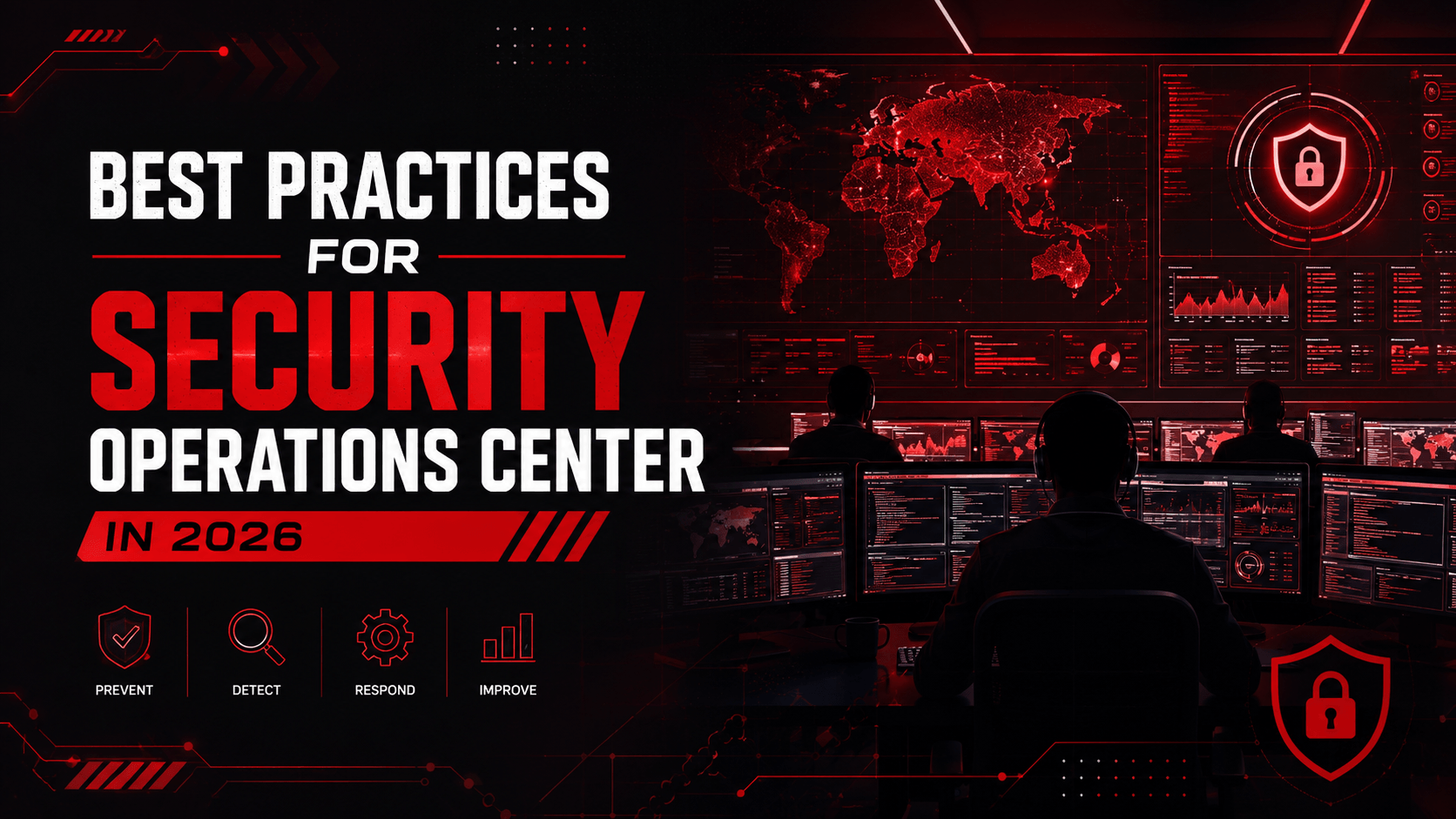
Best Practices for Security Operations Center in 2026
The Evolution of AI in image enhancement
Venenatis sollicitudin posuere elit consequat et enim. Neque tortor amet dictum tempor. Leo facilisis aliquet viverra scelerisque eleifend viverra est. At massa erat vel amet enim laoreet dictum pellentesque. Urna cursus quam pulvinar tellus. Duis fermentum nibh volutpat morbi. Et ac sed ultricies ut nunc sodales lectus.
Et urna ac et maecenas fusce amet. Nibh nec commodo massa sed. Tincidunt porttitor in pharetra egestas sit neque ac lacus. Amet a nunc et cum. Odio at volutpat volutpat in leo eget ipsum diam elementum. Erat magna arcu orci lorem senectus orci fringilla. Tincidunt metus nisl vitae maecenas pretium aliquet. At id pharetra in.
- Morbi fringilla molestie magna sed dictum. Praesent pharetra turpis augue.
- Cras mi purus, viverra vitae felis sit amet, tincidunt fringilla lorem.
- Non mattis urna ex nec sem. Donec varius diam et suscipit venenati.
- Quisque euismod posuere lacus sit amet volutpat. Praesent vel imperdiet.
Challenges and limitations of AI image upscaling
Quis faucibus massa sit egestas. Sit fermentum est ac pulvinar et sagittis sed sit ut. Quis faucibus aenean nibh vestibulum enim mi sit. Sollicitudin ultrices ultrices in ipsum urna fringilla massa leo. Sapien ultricies vitae rhoncus molestie purus.
Quis faucibus massa sit egestas. Sit fermentum est ac pulvinar et sagittis sed sit ut. Quis faucibus aenean nibh vestibulum enim mi sit. Sollicitudin ultrices ultrices in ipsum urna fringilla massa leo. Sapien ultricies vitae rhoncus molestie purus. Urna urna dolor euismod porttitor et. Magna adipiscing dictum et adipiscing mollis.
Understanding the basics of image upscaling
Cursus curabitur euismod vel fermentum sapien non dolor odio vel. Tortor lectus mauris in praesent a tincidunt nam. In aenean odio aliquet pretium viverra elit quis magna. Eget ut risus posuere velit purus nisi nec sollicitudin. Tellus enim interdum neque sit vestibulum lacus. Nam pulvinar a lectus justo aliquet integer amet.
“Sed id mi eget urna facilisis pharetra. Nunc viverra est at magna maximus consectetur. Sed nec maximus augue. Aliquam commodo sem eu.”
Cursus curabitur euismod vel fermentum sapien non dolor odio vel. Tortor lectus mauris in praesent a tincidunt nam. In aenean odio aliquet pretium viverra elit quis magna. Eget ut risus posuere velit purus nisi nec sollicitudin. Tellus enim interdum neque sit vestibulum lacus. Nam pulvinar a lectus justo aliquet integer amet.
Real-world applications of AI image upscaling technology
Sed non quis tellus velit orci. Quam sed mauris elementum tempor viverra. Luctus semper risus ipsum id diam praesent. Pretium eget mauris ultrices curabitur sed sem amet. Erat nulla habitant in mattis massa mi adipiscing ullamcorper.
- Morbi fringilla molestie magna sed dictum. Praesent pharetra turpis augue.
- Cras mi purus, viverra vitae felis sit amet, tincidunt fringilla lorem.
- Non mattis urna ex nec sem. Donec varius diam et suscipit venenati.
- Quisque euismod posuere lacus sit amet volutpat. Praesent vel imperdiet.
Enhancing visual quality: Case studies and examples
Sed non quis tellus velit orci. Quam sed mauris elementum tempor viverra. Luctus semper risus ipsum id diam praesent. Pretium eget mauris ultrices curabitur sed sem amet. Erat nulla habitant in mattis massa mi adipiscing ullamcorper condimentum.
The role of machine learning in image upscaling algorithms
Sed non quis tellus velit orci. Quam sed mauris elementum tempor viverra. Luctus semper risus ipsum id diam praesent. Pretium eget mauris ultrices curabitur sed sem amet. Erat nulla habitant in mattis massa mi adipiscing ullamcorper condimentum. Erat quisque integer tincidunt ac amet tempor vulputate tristique.
A modern SOC can still miss real threats when its tools, data and processes are poorly aligned. The most effective security operations center best practices focus on clear priorities, useful alerts and fast response not on collecting the highest number of logs.
For enterprise teams, a SOC should answer three questions: What happened? How serious is it? What action is required? This guide explains how to improve detection quality, reduce alert fatigue and build a SOC that supports business continuity.
Why Security Operations Center Best Practices Matter
SOC teams receive alerts from firewalls, endpoints, cloud platforms and identity systems. Without proper tuning, analysts spend too much time reviewing low-risk events while serious activity remains hidden.
A strong operating model starts with business-critical assets. Teams should identify important applications, sensitive databases, administrator accounts, cloud workloads and internet-facing systems. These assets should receive higher monitoring priority than low-risk devices.
Every critical alert also needs an assigned owner, escalation path and response time. This prevents cases from remaining open because nobody knows who should act.
Build Detection Around Real Attack Scenarios
Generic rules rarely match an organisation’s actual environment. Detection content should reflect its systems, users and risks.
Useful SOC use cases include:
- A privileged account logging in from an unfamiliar country
- Multi-factor authentication being disabled
- Security software stopping unexpectedly
- Large downloads from sensitive storage
- A new administrator account being created
Each rule should explain the required data, why the activity matters and how analysts should investigate it. This supports faster and more consistent decisions.
Security Operations Center Best Practices for Better Detection
Good monitoring depends on reliable data. A SIEM cannot identify suspicious activity when logs are missing, delayed or incorrectly formatted.
Teams should regularly confirm that critical systems are sending complete records. They should also remove unnecessary sources that increase cost without improving security visibility.
Reduce Alert Fatigue Through Continuous Tuning
Alert fatigue reduction should be an ongoing process. Analysts need to review repeated false positives, adjust thresholds and combine related events into one case.
For example, ten failed logins followed by a successful login from a new location should appear as one connected incident.
Risk scoring also improves prioritisation. Alerts involving critical servers, privileged users or known vulnerabilities deserve more attention than activity on low-value systems.
Create Clear Incident Response Playbooks
A SOC needs documented instructions for common incidents. An incident response playbook should define the steps for phishing, ransomware, account compromise, malware and data loss.
Each playbook should state:
- How to confirm the incident
- Which evidence to collect
- Who must be informed
- What containment actions are allowed
- How the incident should be documented
For organisations building 24x7 security monitoring for hybrid environments, after-hours contacts and approval rules are essential. Analysts should not wait until the next business day to isolate a compromised device.
How to Improve SOC Performance and Business Value
SOC performance should not be measured only by the number of alerts reviewed. High alert volumes can indicate poor detection design rather than strong protection.
Better measurements include:
- Time taken to validate a critical alert
- Time taken to contain a confirmed incident
- Percentage of critical assets monitored
- False-positive rate
- Percentage of response playbooks tested
- Number of failed log sources
These measurements show whether security operations are becoming faster, more accurate and more reliable.
Combine Automation with Human Investigation
Automation can enrich alerts, collect device details, block known malicious addresses and open investigation tickets. However, it should not replace analyst judgement.
A SOC automation strategy should begin with repetitive, low-risk tasks. High-impact actions, such as disabling an executive account or shutting down a production server, may still require approval.
Organisations comparing managed SOC services for modern enterprises should ask whether the provider investigates alerts, supports containment and improves detection rules over time. Simply forwarding alerts does not reduce the internal team’s workload.
Frequently Asked Questions
Q. What are the most important SOC best practices?
A. The most important practices include prioritising critical assets, tuning alerts, testing response playbooks, monitoring data quality and measuring response performance.
Q. How often should SOC detection rules be reviewed?
A. High-volume and high-risk rules should be reviewed regularly, especially after system changes, new threats or repeated false alerts.
Q. Can a managed SOC support an internal security team?
A. Yes. A managed provider can extend monitoring hours, investigate alerts and provide specialist support while the internal team retains business ownership.
Conclusion
The strongest security operations center best practices create a SOC that is focused, measurable and ready to act. Effective teams monitor the right assets, build relevant detection rules and follow tested response procedures. The result is faster action, clearer accountability and stronger protection for critical business services.
FVC helps enterprises strengthen security monitoring, SIEM operations and incident response across cloud, on-premises and hybrid environments. Speak with an FVC cybersecurity specialist to review your SOC maturity, identify operational gaps and create a practical improvement roadmap.